

How visitors made the most of Wisconsin downtowns this summer
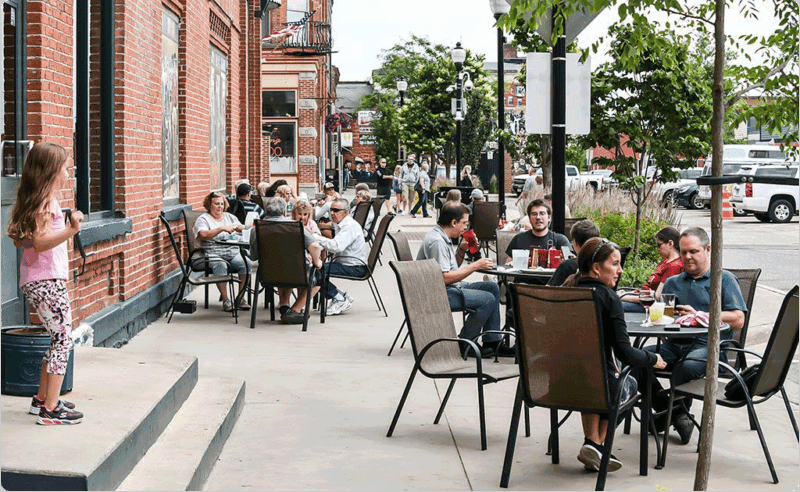
People enjoying a meal and beverage on the sidewalk in Stevens Point.
A summer day downtown can unfold in stages. Someone might browse a shop in the afternoon, meet friends for dinner a few hours later, and finish the evening at a performance, park, or community gathering space. At the same time, another visitor may be downtown for a doctor’s appointment, library visit, or everyday errand.
Those trips look very different, but together they create the activity that makes a downtown feel busy throughout the day.
Using Placer.ai, we took a closer look at visitation patterns from June through August 2026 across a sample of Wisconsin downtown businesses and destinations. The data includes 30 retail locations, 47 eateries, 13 hospitality/venue/attraction locations, five service/medical/education locations, five nature and landmark destinations, and three properties categorized as “other.”
Because participating communities identified a limited number of locations for inclusion, these figures are not intended to represent every business or downtown in the program. Instead, they offer a snapshot of when people are coming downtown, where they are spending time, and the different roles downtown destinations can play throughout the day.
Summer brought more activity downtown
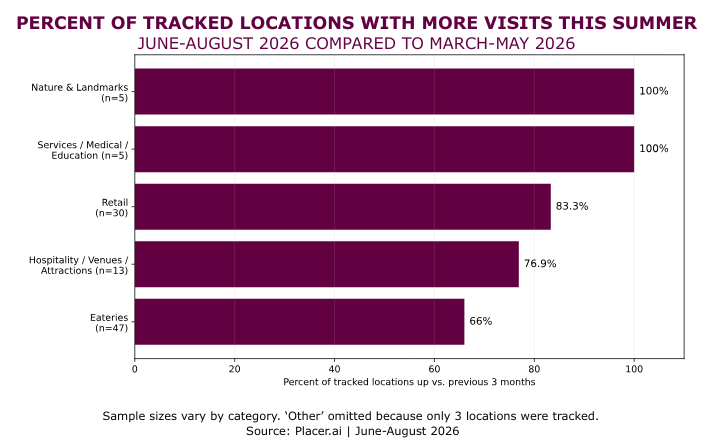
Across most of the categories being tracked, visitation increased from spring into summer.
Compared with March through May, overall visits increased 20.4% among tracked retailers, 13.7% among eateries, 34.6% among service/medical/education locations, and 36.2% among hospitality/venue/attraction locations. At the individual-location level, 83% of retailers, 66% of eateries, 100% of service/medical/education locations, and 77% of hospitality/venue/attraction locations experienced increased visitation.
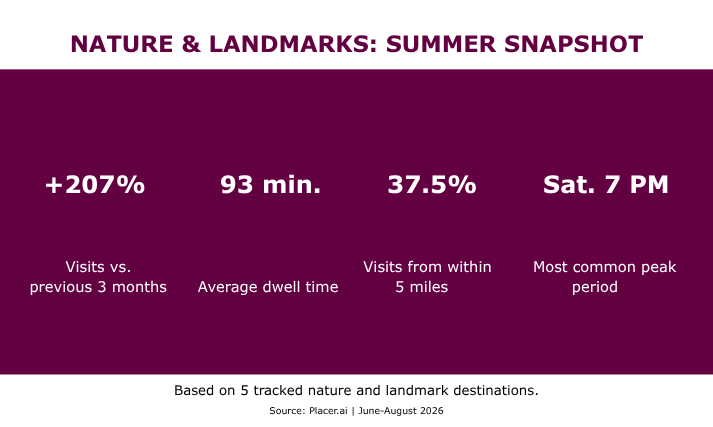
The most dramatic seasonal shift came from nature and landmark destinations. Visits increased 207% compared with the previous three months, with all five tracked locations seeing an increase.
That increase should be viewed in context. Parks, beaches, and outdoor gathering spaces naturally experience significant seasonal changes in Wisconsin. In fact, year-over-year performance among the five locations was mixed, reinforcing that a large spring-to-summer increase does not necessarily mean long-term growth.
A downtown day has a rhythm
One of the most interesting patterns emerges when we look not just at how many people visited, but when they visited.
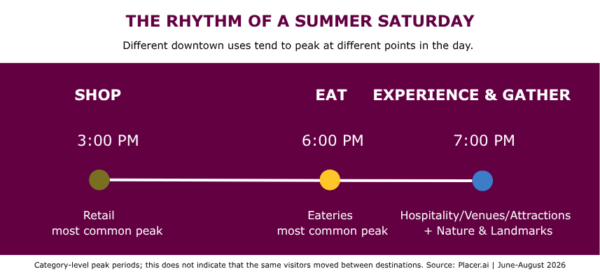
Tracked retailers most commonly peaked at 3 p.m. Saturday. Eateries shifted later, peaking most often at 6 p.m. Saturday, while hospitality, venues, and attractions most commonly peaked at 7 p.m. Saturday. Nature and landmark destinations also peaked most often at 7 p.m. Saturday.
The data does not tell us that the same person shopped at 3 p.m., ate dinner at 6 p.m., and visited an event or park afterward. But together, these patterns illustrate how different uses can complement one another and keep activity moving through a downtown across the day.
There is plenty of variation within those categories, too. Coffee shops and bakeries frequently reached their peak earlier in the day, while many restaurants, pubs, and breweries were busiest later in the afternoon and evening. In retail, specialty shops frequently peaked around midday or early afternoon on Saturdays, while everyday-needs businesses sometimes followed a different pattern.
In other words, there may not be one “busiest time” for downtown. Different businesses can take turns generating activity throughout the day.
Everyday uses create a different kind of activity
Not every downtown trip revolves around shopping, dining, or entertainment.
The service, medical, and education category looked noticeably different from the Saturday-heavy pattern elsewhere. Its most common peak was at 1 p.m. Friday, and all the tracked locations saw increased visitation compared with the previous three months.
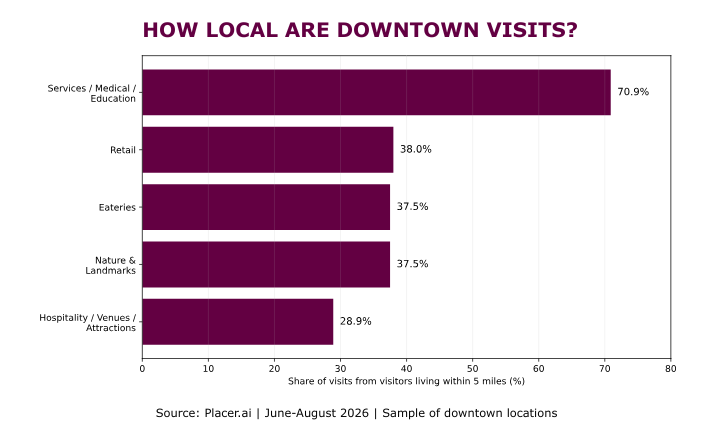
Where those visitors came from also stood out. About 71% of visits to tracked service, medical, and education locations came from visitors who live within 5 miles. That compares with 38% for retail, 37.5% for eateries, 37.5% for nature and landmarks, and 28.9% for hospitality, venues, and attractions.
The sample is small, so these numbers should not be generalized to every downtown service or institution. Still, they illustrate an important role these uses can play: bringing nearby residents downtown during the week and creating a regular base of activity between weekends, festivals, and special events.
Public spaces are downtown destinations, too
The nature and landmarks data adds another layer to the downtown story. Visitors spent an average of about 93 minutes at the five tracked locations, suggesting that parks, waterfronts, plazas, and gathering spaces can be places where visitors spend a meaningful amount of time.
The individual destinations also demonstrate how differently public spaces can function. Neshotah Park & Beach in Two Rivers peaked at 2 p.m. Saturday, while Reefpoint Marina in Racine peaked at 6 p.m. Monument Square in Racine peaked at 7 p.m. Friday, Rotary Park in Jefferson peaked at 7 p.m. Saturday, and Festival Park in Racine reached its peak at 8 p.m. Saturday.
Neshotah Park & Beach alone generated more than 228,000 visits during the three-month period with an average dwell time of about an hour and a half, while Festival Park in Racine averaged just more than two hours per visit.
These destinations should not be compared directly with a shop or restaurant–people use a beach or festival space very differently. But they highlight an important opportunity: Someone spending an hour or two at a downtown-adjacent park, marina, or gathering space is already nearby. The question then becomes how easily they can discover nearby shopping, dining, and other downtown experiences.
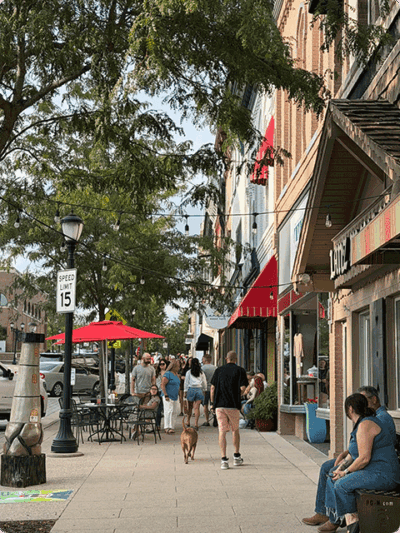
People walking down the sidewalk and browsing in storefronts in downtown Monroe.
From foot traffic to a fuller downtown experience
The biggest takeaway from this summer snapshot may be that there is no single type of “downtown visitor.”
Some people come for an everyday appointment. Others stop for coffee, shop on Saturday afternoon, meet friends for dinner, attend a performance, visit a waterfront, or spend time in a public square.
Geofencing data cannot always tell us why a pattern occurred, and factors including events, weather, operating hours, construction, and promotions can all affect visitation. What it can do is help communities ask better questions.
If retail activity is strongest in the afternoon and dining activity follows a few hours later, are there opportunities to encourage visitors to stay downtown between the two? If a park or venue draws strong evening traffic, do nearby businesses know when those visitors are arriving? If services bring local residents downtown during weekdays, how might nearby businesses connect with those routine trips?
Taken together, these patterns provide a glimpse into the rhythm of downtown–shopping, dining, working, visiting, recreating, staying, and gathering–and how all of those activities contribute to a fuller downtown experience.
Legal Disclaimer:
EIN Presswire provides this news content "as is" without warranty of any kind. We do not accept any responsibility or liability for the accuracy, content, images, videos, licenses, completeness, legality, or reliability of the information contained in this article. If you have any complaints or copyright issues related to this article, kindly contact the author above.
